Plyometric Workout Program: A Comprehensive Guide
Plyometric training‚ detailed in a comprehensive program‚ enhances power and athletic ability through explosive movements; a PDF guide streamlines implementation for optimal results․
What are Plyometrics?

Plyometrics are a dynamic form of exercise‚ often detailed within a plyometric workout program PDF‚ characterized by explosive movements․ These exercises leverage the stretch-shortening cycle (SSC) – a rapid eccentric contraction immediately followed by a concentric contraction – to maximize power output․ Essentially‚ they train muscles to exert maximal force in short intervals of time․
Unlike traditional weightlifting focusing on constant resistance‚ plyometrics utilize bodyweight and minimize external loads‚ emphasizing speed and reactivity․ Common examples‚ frequently outlined in PDF guides‚ include box jumps‚ squat jumps‚ and medicine ball throws․ This training method isn’t simply about jumping higher; it’s about improving the rate at which force is developed‚ crucial for athletic performance and overall functional fitness․ A well-structured program ensures proper technique and progression․
The Science Behind Plyometric Training (Stretch-Shortening Cycle)
The core of plyometric training‚ often explained in detail within a plyometric workout program PDF‚ lies in the stretch-shortening cycle (SSC)․ This three-phase process begins with an eccentric contraction – a muscle lengthening under load‚ storing elastic energy․ This is followed by an amortization phase‚ a brief transition period‚ and culminates in a concentric contraction – a muscle shortening‚ releasing the stored energy․
A PDF guide will highlight how minimizing the amortization phase is key; a quicker transition maximizes power․ Neuromuscular adaptations also play a vital role‚ improving muscle spindle activation and reflexes․ This enhanced efficiency allows for greater force production‚ contributing to increased speed‚ jump height‚ and overall explosiveness․ Understanding the SSC‚ as detailed in a comprehensive program‚ is crucial for safe and effective training․
Benefits of Incorporating Plyometrics
A well-structured plyometric workout program‚ often available as a downloadable PDF‚ delivers a multitude of benefits․ Primarily‚ it dramatically increases power and explosiveness‚ crucial for athletic performance across various disciplines․ These gains translate to improved jump height‚ sprinting speed‚ and agility – all key components of success in sports․
A PDF guide will emphasize that plyometrics aren’t solely for athletes; they enhance functional fitness‚ improving everyday movements․ The training strengthens muscles‚ bones‚ and connective tissues‚ while simultaneously boosting neuromuscular coordination․ Furthermore‚ it improves cardiovascular health due to the high-intensity nature of the exercises․ A comprehensive program‚ detailed in a PDF‚ unlocks these advantages safely and effectively․
Increased Power and Explosiveness
A plyometric workout program‚ often accessed as a convenient PDF‚ fundamentally focuses on boosting power and explosiveness․ This is achieved through exercises leveraging the stretch-shortening cycle (SSC)‚ rapidly stretching a muscle before an immediate contraction․ A detailed PDF will illustrate how this process enhances force production․
The result? Athletes experience significant improvements in their ability to generate force quickly․ This translates to more powerful jumps‚ faster sprints‚ and more forceful throws․ A PDF guide will outline specific drills – box jumps‚ squat jumps‚ and medicine ball throws – designed to maximize these gains․ Properly implemented‚ a plyometric program detailed in a PDF‚ unlocks untapped athletic potential‚ building explosive strength․
Improved Athletic Performance
A well-structured plyometric workout program‚ readily available as a PDF download‚ significantly enhances overall athletic performance․ By focusing on explosive movements‚ these programs improve speed‚ agility‚ and coordination – crucial components for success in various sports․ A comprehensive PDF will detail how these improvements translate to real-world athletic gains․
The rapid force development cultivated through plyometrics benefits athletes across disciplines‚ from basketball and volleyball to track and field․ A PDF guide will showcase exercises targeting specific muscle groups and movement patterns‚ optimizing performance for each sport․ Implementing a plyometric program‚ as outlined in a PDF‚ isn’t just about jumping higher; it’s about becoming a more dynamic and efficient athlete․
Enhanced Jump Height
A dedicated plyometric workout program‚ conveniently accessed as a PDF‚ is a cornerstone for increasing vertical jump height․ These programs leverage the stretch-shortening cycle‚ training muscles to exert maximum force in minimal time․ A detailed PDF guide will illustrate the specific exercises and progressions designed to achieve this goal․
Exercises like box jumps‚ squat jumps‚ and single-leg hops‚ thoroughly explained within a PDF‚ are fundamental for developing explosive leg power․ Consistent implementation of a plyometric routine‚ guided by a PDF‚ leads to noticeable improvements in jump height‚ benefiting athletes in basketball‚ volleyball‚ and other jumping-intensive sports․ The PDF will also emphasize proper form to maximize gains and minimize injury risk‚ ensuring safe and effective training․
Essential Plyometric Exercises
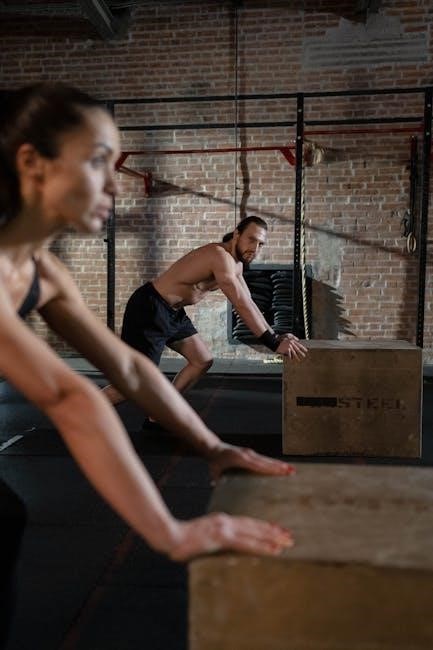
A plyometric workout program PDF details crucial exercises—box jumps‚ squat jumps‚ and medicine ball throws—to build explosive power and athleticism effectively․
Lower Body Plyometrics
Lower body plyometrics‚ as outlined in a detailed plyometric workout program PDF‚ are foundational for developing explosive leg power․ Box jumps improve vertical leap and power output‚ requiring athletes to jump onto a stable box of varying heights․ Squat jumps build strength and explosiveness through a dynamic squat followed by an immediate jump․
Lateral jumps enhance agility and lateral power‚ involving jumping side-to-side over a low obstacle․ Bounding exercises‚ like alternating long jumps‚ develop stride length and power․ Finally‚ single-leg hops improve unilateral power and stability‚ crucial for many sports․ A well-structured PDF program will detail proper form‚ progression‚ and appropriate rest periods for each exercise‚ minimizing injury risk and maximizing gains․ Remember to prioritize controlled landings to absorb impact effectively․
Box Jumps
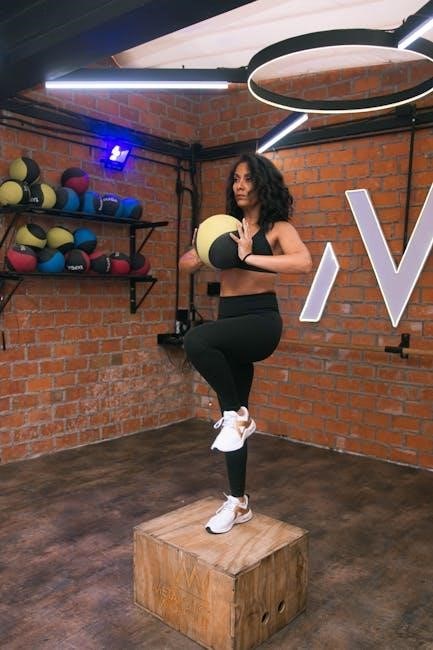
Box jumps‚ a cornerstone of any effective plyometric workout program PDF‚ are crucial for developing explosive leg power and increasing vertical jump height․ Begin with a box height appropriate for your fitness level‚ ensuring a safe and controlled landing is possible․ The exercise involves explosively jumping onto the box from a standing position‚ landing softly with bent knees․
Step‚ don’t jump‚ back down to repeat․ A comprehensive PDF guide will emphasize proper technique: maintaining an upright torso‚ driving through the hips‚ and avoiding excessive forward lean․ Progression involves gradually increasing box height as strength and power improve․ Focus on quality over quantity‚ prioritizing controlled movements and minimizing impact․ Box jumps build both power and coordination‚ making them a valuable addition to any athlete’s training regimen․
Squat Jumps

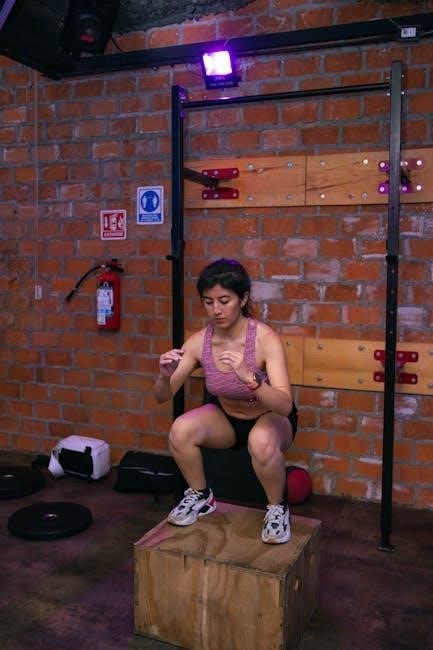
Squat jumps are a fundamental exercise within a plyometric workout program PDF‚ designed to enhance lower body power and explosiveness․ Starting in a squat position‚ athletes explosively jump upwards‚ extending the hips‚ knees‚ and ankles fully․ Upon landing‚ immediately return to the squat position‚ absorbing the impact with bent knees – minimizing stress on joints is key․
A well-structured PDF will detail proper form: maintaining a straight back‚ keeping the core engaged‚ and ensuring a soft‚ controlled landing․ Progression can involve increasing jump height or adding resistance‚ like a light vest․ Squat jumps improve both power and reactive strength‚ crucial for athletic performance․ Focus on maximizing ground contact time while maintaining explosive power throughout each repetition․
Lateral Jumps
Lateral jumps‚ detailed within a plyometric workout program PDF‚ are excellent for developing side-to-side power‚ agility‚ and coordination․ Athletes initiate the movement by jumping laterally (to the side) from one foot‚ landing softly on the opposite foot․ The focus is on explosive power generated from the glutes and thighs‚ with a controlled landing to absorb impact․
A comprehensive PDF guide will emphasize maintaining a slight bend in the knees throughout the exercise and keeping the core engaged for stability․ Progression involves increasing the distance of the jump or adding a small hurdle․ Lateral jumps are beneficial for sports requiring quick changes in direction․ Proper form prevents knee injuries‚ ensuring a safe and effective workout․
Bounding Exercises
Bounding exercises‚ as outlined in a detailed plyometric workout program PDF‚ are advanced movements focusing on maximal power development and stride length․ These involve exaggerated running strides‚ emphasizing both horizontal and vertical propulsion․ Athletes propel themselves forward with each stride‚ maximizing ground contact time and utilizing the stretch-shortening cycle․
A well-structured PDF will detail variations like single-leg bounds and alternating bounds‚ progressively increasing distance and intensity․ Proper technique‚ including a strong core and controlled landings‚ is crucial to prevent injury․ Bounding significantly improves explosive leg power‚ crucial for sprinting and jumping sports․ The PDF should include guidance on appropriate surface selection and warm-up protocols before performing these high-impact exercises․
Single-Leg Hops
Single-leg hops‚ a key component detailed within a comprehensive plyometric workout program PDF‚ are invaluable for developing unilateral power‚ balance‚ and ankle stability․ These exercises challenge the athlete to generate force from one leg‚ mimicking movements common in many sports․ The PDF should illustrate variations like forward hops‚ lateral hops‚ and hops over low obstacles‚ progressively increasing difficulty․
Focus should be on maintaining proper form – a stable core‚ controlled landing‚ and minimal ground contact time․ The program PDF will emphasize the importance of starting with shorter distances and lower hop heights‚ gradually increasing as strength and coordination improve․ Single-leg hops are excellent for injury prevention‚ strengthening supporting muscles and improving proprioception․
Upper Body Plyometrics
Upper body plyometrics‚ as outlined in a detailed plyometric workout program PDF‚ are often overlooked but crucial for developing explosive upper body power․ These exercises utilize the stretch-shortening cycle in the chest‚ shoulders‚ and triceps‚ enhancing performance in throwing‚ striking‚ and other upper body-dominant activities․ The PDF will feature exercises like medicine ball chest passes‚ focusing on forceful‚ rapid throws․
Plyometric push-ups‚ with variations like clapping push-ups‚ are also included‚ demanding a quick‚ explosive extension․ Proper technique‚ as demonstrated in the PDF‚ is paramount to prevent injury․ The program emphasizes controlled landings and a focus on maximizing power output with each repetition․ Weight of the medicine ball can vary between 5-10lbs․
Medicine Ball Chest Pass
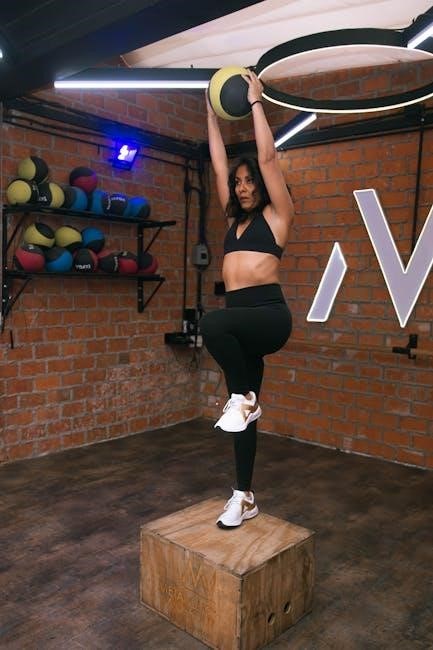
The Medicine Ball Chest Pass‚ detailed within a plyometric workout program PDF‚ is a foundational upper body plyometric exercise․ This drill enhances explosive power in the chest and shoulders‚ crucial for sports requiring throwing or forceful upper body movements․ The PDF will instruct athletes to begin in a comfortable‚ upright stance‚ feet shoulder-width apart‚ facing a wall or partner․
The exercise involves powerfully throwing a medicine ball (typically 5-10lbs) forward‚ utilizing a rapid arm motion and full body engagement․ Emphasis is placed on the stretch-shortening cycle – quickly absorbing force before explosively releasing it․ The PDF will highlight proper form‚ including core stabilization and controlled follow-through‚ to maximize effectiveness and minimize injury risk․ Repetitions and sets will be clearly outlined․
Plyometric Push-Ups
Plyometric Push-Ups‚ as detailed in a comprehensive plyometric workout program PDF‚ are an advanced upper body exercise designed to develop explosive power and reactivity in the chest‚ shoulders‚ and triceps․ Unlike standard push-ups‚ these incorporate a dynamic‚ jumping element․ The PDF guide will emphasize starting in a standard push-up position‚ hands shoulder-width apart․
The execution involves lowering the body as in a regular push-up‚ but explosively pushing upwards with enough force to briefly lift both hands off the ground․ Athletes should aim for a short flight phase before landing softly‚ immediately transitioning into the next repetition․ The PDF will stress maintaining proper form – a straight back and controlled descent – to prevent injury․ Sets and reps will be tailored to fitness level․
Designing Your Plyometric Workout Program
A well-structured plyometric workout program PDF requires careful planning‚ including warm-ups‚ cool-downs‚ and progressive overload‚ to maximize gains and minimize injury risk․
Warm-up Routine for Plyometrics
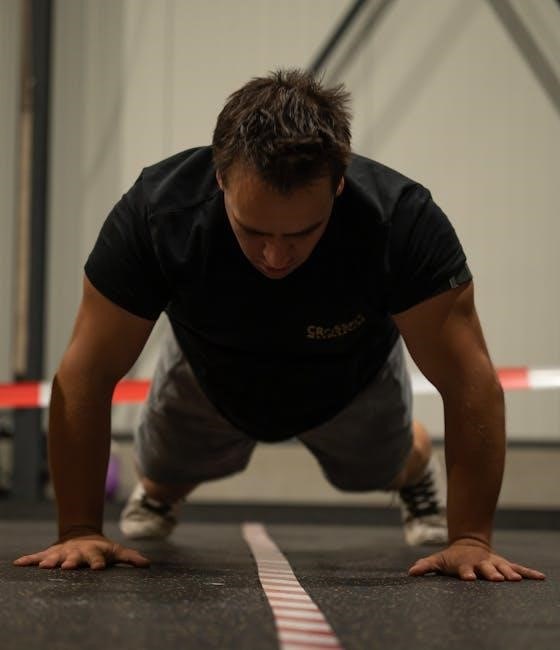
A dynamic warm-up is crucial before any plyometric workout program‚ as detailed in a comprehensive PDF guide․ Begin with 5-10 minutes of light cardio‚ such as jogging or jumping jacks‚ to elevate heart rate and increase blood flow to the muscles․
Follow this with dynamic stretches‚ focusing on movements that mimic the exercises you’ll be performing․ Include leg swings (forward‚ backward‚ and lateral)‚ arm circles‚ torso twists‚ and high knees․
Specifically‚ incorporate exercises like walking lunges with a twist‚ inchworms‚ and butt kicks․ These prepare the muscles and joints for the explosive demands of plyometrics․
A proper warm-up enhances performance‚ reduces the risk of injury‚ and ensures your body is adequately prepared for the intensity of the workout․ Spend approximately 10-15 minutes on a thorough warm-up before each session․
Cool-down and Recovery
Following a plyometric workout program‚ as outlined in a detailed PDF guide‚ a proper cool-down is essential for muscle recovery and injury prevention․ Begin with 5-10 minutes of light cardio‚ such as walking‚ to gradually decrease your heart rate․
Static stretching should then be performed‚ holding each stretch for 20-30 seconds․ Focus on major muscle groups used during the workout‚ including calves‚ hamstrings‚ quadriceps‚ glutes‚ and hip flexors․
Foam rolling can also be incorporated to release muscle tension and improve flexibility․ Prioritize adequate hydration and nutrition to replenish energy stores and support muscle repair․
Allowing sufficient rest between plyometric sessions – typically 48-72 hours – is crucial for optimal recovery and adaptation․ Listen to your body and adjust the program as needed․
Program Structure: A 6-Week Plan
A progressive plyometric workout program‚ detailed in a PDF format‚ is structured over six weeks to maximize gains and minimize injury risk․ This plan systematically increases intensity and volume․
Phase 1 (Weeks 1-2): Focuses on building a foundation with low-intensity exercises like ankle hops and jumping rope‚ emphasizing proper form and technique․ Volume is relatively low‚ with 2-3 sessions per week․
Phase 2 (Weeks 3-4): Intensifies the training with exercises like box jumps and squat jumps‚ increasing the height and complexity․ Volume increases to 3-4 sessions weekly․
Phase 3 (Weeks 5-6): Peaks performance with advanced exercises like bounding and single-leg hops‚ maximizing power output․ Volume remains at 3-4 sessions‚ with a focus on quality over quantity․
Phase 1: Foundation (Weeks 1-2)
The initial phase of this plyometric workout program‚ outlined in a detailed PDF‚ prioritizes establishing a solid base․ Weeks 1-2 concentrate on low-intensity drills to prepare the neuromuscular system for more demanding exercises․ Focus is on mastering landing mechanics and minimizing impact forces․
Exercises include ankle jumps‚ focusing on quick ground contact time‚ and basic jumping rope‚ building rhythm and coordination․ Perform 2-3 sessions weekly‚ with 24-48 hours of rest between workouts․ Each session should include a thorough warm-up and cool-down․ Volume is kept low – 2-3 sets of 8-10 repetitions per exercise․

Prioritize proper form over height or speed; this phase is about building a foundation‚ not achieving peak performance․
Phase 2: Intensification (Weeks 3-4)
Building upon the foundation established in Phase 1‚ this plyometric workout program (detailed in the PDF) enters an intensification phase during Weeks 3-4․ We increase exercise intensity and complexity‚ challenging the neuromuscular system further․ Introduce exercises like squat jumps and lateral jumps‚ focusing on explosive power generation․
Workout frequency remains at 2-3 sessions per week‚ but volume increases to 3-4 sets of 10-12 repetitions․ Incorporate bounding exercises with shorter distances‚ emphasizing controlled flight and landing․ Continue prioritizing proper form‚ but encourage a greater emphasis on speed and explosiveness․
Monitor fatigue levels closely and adjust volume as needed․ This phase aims to improve reactive strength and prepare the body for peak performance training․
Phase 3: Peak Performance (Weeks 5-6)
The final phase of this plyometric workout program (outlined in the PDF guide) focuses on maximizing power output during Weeks 5-6․ This stage incorporates advanced exercises like box jumps and single-leg hops‚ demanding significant explosive strength and coordination․ Volume is slightly reduced to 3 sets of 8-10 repetitions to prioritize quality over quantity․
Maintain a frequency of 2-3 sessions weekly‚ ensuring adequate recovery between workouts․ Emphasize maximal effort with each repetition‚ focusing on minimizing ground contact time․ Introduce more challenging variations of previously learned exercises‚ such as depth jumps (with caution and proper technique)․
This phase is crucial for translating the gains from previous weeks into tangible improvements in athletic performance․ Careful monitoring of fatigue and adherence to proper form are paramount․

Safety Considerations & Precautions
A plyometric workout program PDF must emphasize proper form‚ gradual progression‚ and awareness of contraindications to prevent injuries and maximize benefits․
Proper Form and Technique
Plyometric workout program PDF guides should prioritize impeccable form; incorrect technique drastically increases injury risk and diminishes effectiveness․ Focus on controlled landings‚ absorbing impact with bent knees and a stable core․
Maintain a neutral spine throughout each exercise‚ avoiding excessive rounding or arching․ Ensure adequate warm-up prepares muscles for explosive movements․ For jumps‚ emphasize quick ground contact time – the shorter the contact‚ the more powerful the movement․
When utilizing medicine balls‚ maintain a firm grip and controlled throwing motion․ A PDF resource should include visual demonstrations and detailed cues for each exercise․ Prioritize quality over quantity; fewer repetitions with perfect form are far superior to numerous reps performed sloppily․
Progression and Overload
A well-structured plyometric workout program PDF must incorporate progressive overload․ Begin with low-intensity exercises and gradually increase the challenge over time․ This could involve increasing jump height‚ distance‚ or the number of repetitions․
The PDF should detail a phased approach‚ starting with foundational movements and progressing to more complex‚ high-impact drills․ Monitor your body’s response and avoid advancing too quickly․
Overload can also be achieved by adding resistance‚ such as wearing a weighted vest or using heavier medicine balls․ Ensure adequate recovery between sets and workouts to allow muscles to adapt․
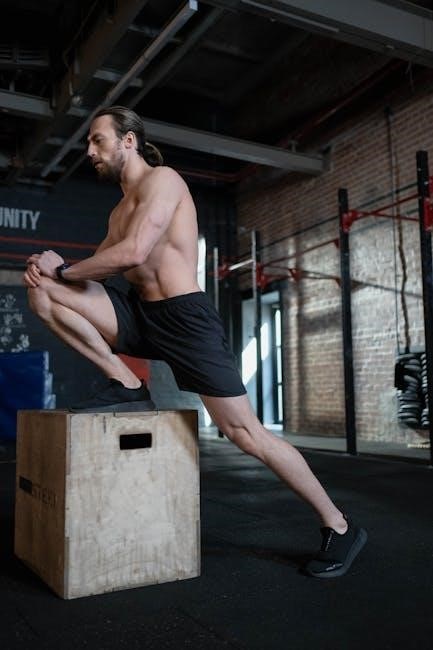
Periodically assess your progress and adjust the program accordingly․ Listen to your body and don’t hesitate to regress if you experience pain or fatigue․
Contraindications for Plyometric Training
A comprehensive plyometric workout program PDF must clearly outline contraindications․ Individuals with joint pain‚ instability‚ or a history of musculoskeletal injuries should avoid plyometrics until cleared by a healthcare professional․ Pre-existing conditions like arthritis or osteoporosis also pose risks․
Those new to exercise or with limited strength should build a base before attempting plyometric drills․
The PDF should emphasize that plyometrics are high-impact and not suitable for everyone․ Pregnant women‚ individuals recovering from surgery‚ and those with cardiovascular issues require medical clearance․
Ignoring these contraindications can lead to injury․ Proper screening and modification are crucial for safe and effective training․ Always prioritize health and well-being over pushing physical limits․